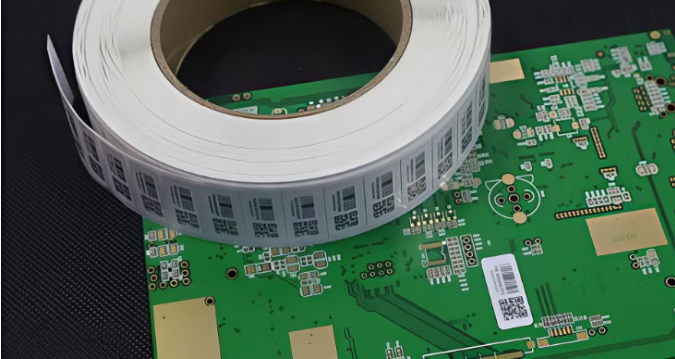
Labels for electronic components and PCB traceability applications have far more stringent requirements than general-purpose commodity labels. These applications frequently employ rigid facestock materials, such as PET films and heavy-weight coated paper, alongside high-speed die-cutting and automated labeling processes. Under such demanding conditions, adhesive formulations must strike a careful balance among cohesive strength, initial tack, processability, and thermal stability. Selecting the right base elastomer is critical to achieving consistent adhesive performance. 1. Key Challenges in PCB and Electronic Label Applications For labels applied to printed circuit boards (PCBs) and electronic components, three key performance requirements often present challenges for adhesive formulators. Clean Die-Cutting Performance During high-speed die-cutting, insufficient cohesive strength may cause adhesive build-up on cutting blades, resulting in ragged edges, incomplete cutting, and reduced production efficiency. Reliable Label Application at High Speeds Automated labeling lines require fast initial tack to ensure immediate bonding and precise positioning. Insufficient tack or excessive adhesive flow may result in label slippage, sagging, or lifting during application. Resistance to Adhesive Oozing at Elevated Temperatures Electronic components may be exposed to elevated temperatures during operation. If the adhesive lacks sufficient cohesive strength, it may gradually creep and ooze beyond the label edges. In PCB applications, this can potentially contaminate critical areas such as circuit traces and solder pads, potentially affecting product reliability. Conventional SBS- or SIS-based formulations may struggle to balance these competing requirements. Increasing initial tack may compromise cohesive strength, while excessive rigidity may affect melt processability and initial adhesion. This makes the molecular structure of the base elastomer a critical factor in formulation design. 2. Key Performance Advantages of High-Stiffness Linear SBS Our high-stiffness linear SBS is designed to help address these challenges through a combination of high styrene content and high diblock content. High Cohesive Strength and Dimensional Stability Its high styrene content contributes to higher modulus and cohesive strength. When formulated into pressure-sensitive adhesives, it helps maintain adhesive layer stiffness, supporting clean die-cutting and reducing adhesive build-up on cutting blades. During long-term storage or exposure to elevated temperatures, its cohesive properties help limit adhesive flow and oozing, reducing the risk of contamination around PCB circuits and maintaining reliable bonding performance. Good Melt Flow and Initial Tack The high diblock content contributes to favorable melt flow and initial tack properties. This helps facilitate smooth melt processing and coating, while enabling rapid bonding during high-speed automated label application. The resulting adhesive formulation can achieve faster initial fixation, helping reduce label sagging and shifting after placement. A Balanced Performance Profile By combining the rigidity and cohesive strength associated with high styrene content with the flow characteristics and tack contribution of a high diblock structure, this SBS grade offers a balanced foundation for adhesive formulations requiring: - Clean and efficient die-cutting - Fast initial tack for reliable label positioning - Good melt processability for coating operations - Improved resistance to adhesive oozing at elevated temperatures 3. Recommended Application Areas As a base elastomer for hot-melt pressure-sensitive adhesives, this high-stiffness linear SBS is particularly suitable for developing formulations for: - PCB identification and traceability labels - Electronic component identification labels - Industrial equipment marking labels It is especially relevant for applications involving relatively rigid facestock materials, including PET films and heavy-weight coated paper, where clean die-cutting and reliable label application are essential. 4. Formulation and Processing Considerations When developing formulations with this linear SBS as the primary elastomer, formulators should select compatible tackifying resins and functional additives while considering the following points: Balance Initial Tack and Cohesive Strength. Avoid focusing solely on increasing tack at the expense of adhesive modulus and cohesion, as this may increase the risk of adhesive oozing at elevated temperatures. Conduct Laboratory-Scale Evaluations.Test die-cutting performance, resistance to adhesive oozing after thermal aging, and peel adhesion. Confirm that the formulation meets the required specifications before proceeding to full-scale production. Pay Attention to Material Cleanliness. Electronic label applications place high demands on material cleanliness and formulation stability. Evaluate raw material consistency and potential low-molecular-weight component migration to minimize the risk of contamination of sensitive electronic components. In many formulation development projects, considerable effort is spent adjusting tackifiers and additives, while the modulus and cohesive strength of the base SBS polymer may be overlooked. If the base elastomer itself lacks sufficient cohesion, adjustments to additives alone may not fully resolve issues such as die-cutting build-up and thermal adhesive oozing. Selecting an appropriate SBS grade at the beginning of formulation development provides a solid foundation for addressing these challenges. Conclusion PCB and electronic component labels are demanding industrial labeling applications. Adhesive performance cannot be evaluated by tack alone; clean die-cutting, resistance to adhesive oozing, and reliable high-speed label application are all essential. Engineered to balance cohesive strength, melt processability, and initial tack, our high-stiffness linear SBS offers a promising base polymer for hot-melt PSA formulations targeting PCB and electronic component traceability labels. If you are developing hot-melt pressure-sensitive adhesives for electronic labeling applications and facing challenges with die-cutting or adhesive oozing at elevated temperatures, reach out to our technical team at DZBH to explore our SBC product portfolio and discuss your formulation requirements.