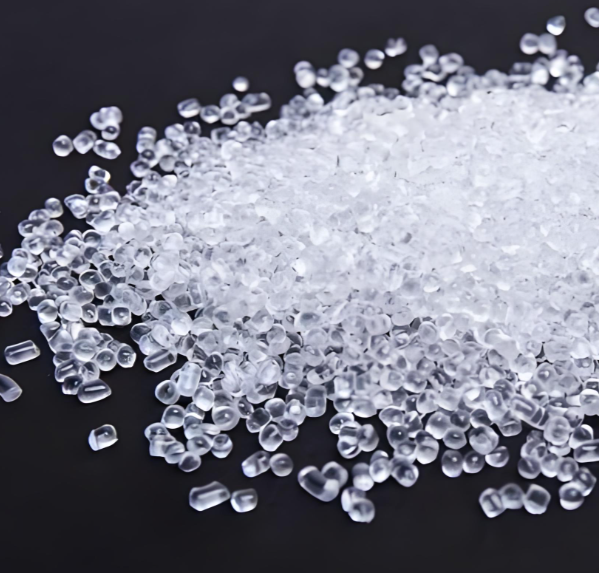
High-end TPE materials, with advantages such as a soft touch, environmental friendliness and non-toxicity, and aging resistance, are widely used in high-end fields such as soft toys, premium footwear, and medical devices. For such products, surface gloss is a key indicator that reflects quality and enhances product added value. Consumers have very high expectations for the durability of the gloss. However, in actual production and use, many conventional methods employed by companies to improve gloss often fail to achieve long-lasting effects, and gloss deterioration is a frequent issue. II. Fundamental Solution
I. Conventional Methods for Enhancing TPE Gloss
Conventional methods for improving gloss have obvious limitations and cannot achieve long-lasting gloss retention. Some manufacturers, in order to enhance the gloss of high-end TPE, often rely on a single lubricant or adjust the processing temperature.
1. Using only a lubricant can temporarily increase the smoothness of the material surface and improve initial gloss during processing, but it cannot address issues such as uneven polymer phase dispersion or filler agglomeration. The agglomerated fillers can damage the surface smoothness, leading to rapid gloss decline. At the same time, excessive lubricant can cause oil exudation, resulting in an oily and sticky surface on the TPE, which not only affects the long-term gloss but also reduces product safety and user experience.
2. Adjusting the processing temperature can only optimize the material's flow during processing and alleviate short-term gloss defects during molding. It cannot improve the internal structural stability of TPE. During long-term use, the material is prone to deformation and uneven shrinkage, which can cause phase separation, ultimately leading to significant gloss degradation and failing to meet the quality requirements of high-end products.
To fundamentally achieve the long-lasting gloss of high-end TPE, the core solution is to add specific types of SEBS to the TPE formulation. By optimizing the internal structure of the material, this approach thoroughly addresses various issues affecting the durability of gloss.
1. First, this SEBS has unique advantages such as high fluidity, a star-shaped structure, and high elongation. Within the TPE formulation system, its molecular chains can fully stretch and uniformly wrap around different filler particles, effectively preventing filler agglomeration. This ensures a uniform dispersion of internal components and fundamentally avoids the disruption of surface smoothness caused by aggregated particles, laying the foundation for long-lasting gloss.
2. Secondly, its low styrene content greatly enhances compatibility with the non-polar plastic phase, significantly strengthening the interfacial adhesion between the plastic and elastic phases, reducing phase separation, and preventing surface roughness or dullness caused by phase separation, thereby further consolidating surface gloss.
3. Finally, this SEBS is characterized by low permanent deformation and low volatility. During processing and long-term use, it will not cause internal structural imbalance due to uneven shrinkage, nor will the surface develop defects from the loss of volatile substances. It can stably maintain the fine gloss of the material surface, truly achieving long-lasting gloss for high-end TPE.
Additionally, on the basis of adding this type of SEBS, further enhancing the longevity of gloss can be achieved by properly controlling the amount of lubricant and optimizing processing parameters, ensuring that high-end TPE products maintain excellent tactile and visual quality over the long term.