I. Applicable Scenarios and Core Requirements 2. Optimization of viscosity and reinforcement system
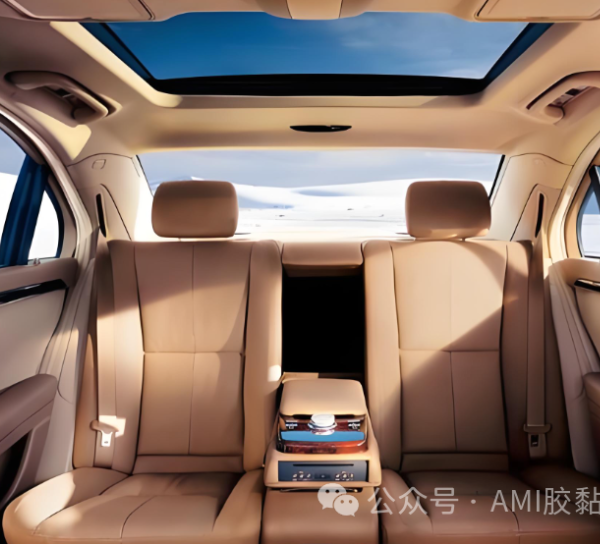
Flexible interior components such as car seat leather, door panels, and sun visors are mostly manufactured using high-speed automated production lines for soft wrapping, with the primary goals being cleanliness, efficiency, and cost-effectiveness. SEBS-based hot-melt adhesive films have widely replaced traditional coated adhesives due to their solvent-free, low-VOC properties and compatibility with multi-material composites. For high-end flexible interior assemblies, the core requirements for adhesive films are high bonding strength and heat resistance. These requirements necessitate precise formula optimization to balance flexibility, process adaptability, and cost-effectiveness in mass production. SEBS-based adhesive films are well-suited for automotive interior conditions such as prolonged high-temperature exposure and long-term adhesion durability, offering a higher cost-performance ratio compared to TPU-based and PA-based films.
II. Core Formula Optimization Plan
1. Selection and Optimization of Elastomer Base Materials
Priority is given to using high molecular weight SEBS (Mooney viscosity ML1+4@100℃≥80), whose long, tightly entangled molecular chains significantly enhance the cohesive strength of the adhesive film, laying the foundation for high bonding strength while retaining excellent flexibility to accommodate the deformation needs of interior components. When necessary, 5%-8% high molecular weight SEPS can be blended. SEPS has superior thermal resistance (long-term 110-120°C) compared to SEBS and can synergistically enhance the adhesive film's heat resistance and low-temperature toughness, preventing softening or adhesion failure at high temperatures. Moreover, SEPS is highly compatible with SEBS and does not compromise system stability.
The hydrogenated resin with a high softening point (105-115°C) can improve the high-temperature adhesion of the film and the wettability of multiple substrates, and adapt to the mainstream substrates such as leather, PP, and ABS to achieve "substrate destruction" bonding. The compound system takes into account compatibility and bond strength to avoid the problem of high-temperature precipitation caused by a single resin.
Add 1%-1.5% composite coupling agent (KH-560 + temperature-resistant titanate NDZ-201, 1:1 ratio), one end is bound to the SEBS/SEPS molecular chain, and the other end is chemically bonded with the substrate, which greatly improves the interfacial bonding strength and the bond is stable and does not fail at high temperatures.
With the addition of 1%-2% hydrophobic nano-fumed silica, the nanoparticles are evenly dispersed in the system, which is lightweight and reinforced, and does not destroy the flexibility, while improving the high-temperature creep resistance and cohesive strength of the film, and reducing the risk of high-temperature shrinkage and debonding.
3. Adaptation and adjustment of auxiliary systems
Ultra-high viscosity white oil (5%-7% added) is used to reduce the migration of small molecules and improve high-temperature stability; The quaternary composite antioxidant system (1010+168+1098+DLTP) is used to prevent the high-temperature degradation of elastomers and viscosity resins and extend the service life of the film. Add a temperature-resistant and weather-resistant compound system to avoid yellowing and performance degradation of the film after exposure to sunlight.
III. Process adaptation and performance objectives
After the optimization, the formula is still suitable for the existing extrusion casting and hot melt hot pressing processes, and only needs to fine-tune the extrusion temperature to 165-170°C, the hot pressing temperature is 130-160°C, and the holding pressure is 0.8-1.2MPa, which is suitable for high-speed production lines.