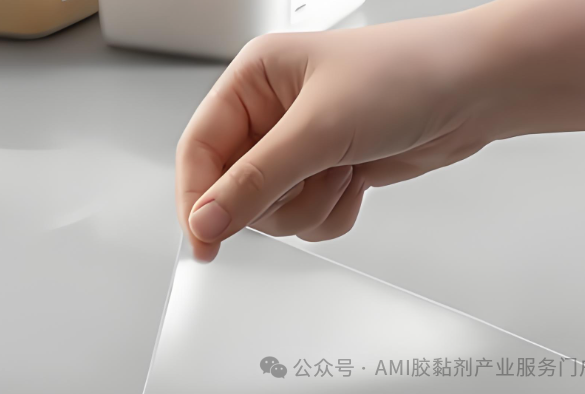
Self-adhesive films, as three-layer co-extruded adhesive films, rely on SEBS or SEPS containing diblock segments as the base material for the adhesive layer to achieve environmental friendliness, easy adhesion and removal, and residue-free characteristics. Due to differences in molecular structure (partially hydrogenated / fully hydrogenated) and polarity characteristics, the two are suitable for different scenarios while covering the vast majority of common protection needs. SEBS-based self-adhesive films are characterized by "weak polarity, partial hydrogenation, containing diblock segments" and are suitable for light protection scenarios on polar substrates in indoor environments. They can achieve stable adhesion without complex formula adjustments. 2. SEPS-based self-adhesive film SEPS-based self-adhesive films are the first choice for extreme environments, high cleanliness requirements, and ultra-thin film scenarios, while also having broad-spectrum substrate adaptability.
1. SEBS-Based Self-Adhesive Films
The main suitable substrates include moderately to highly polar plastics, metals, glass, ceramics, etc., specifically covering ABS (electronic housings, appliance panels), PVC (pipes, decorative films), PC (optical lenses, electronic housings), PMMA (acrylic decorative parts, display stands), stainless steel (kitchenware, architectural decorative parts), aluminum alloy (automotive parts, furniture frames), ordinary glass / tempered glass (doors, windows, displays), and glazed ceramics (bathroom fixtures, tiles). These substrates have surface polar groups (such as hydroxyl, ester groups, chlorine atoms) or surface tension ≥38 mN/m, which can form effective intermolecular interactions with the weakly polar SEBS structure. Light pressure is sufficient for adhesion, with a holding time ≥18h (40℃ × 2kg), and when removed, no adhesive residue is left, and the substrate surface gloss or coating is not damaged.
The core advantages of this type of adhesive film are high cost-performance and strong processing compatibility. It is suitable for short-term protection needs of 1-3 months, such as scratch prevention during product transportation, dust protection during storage, and temporary fixation during assembly in indoor scenarios. SEBS has a small amount of residual double bonds, making it less resistant to weathering and extreme environments. It is not recommended for outdoor, high-temperature (>80℃) or low-temperature (<-30℃) conditions and has poor adhesion to non-polar substrates (such as PE, PP), which requires the addition of non-polar tackifiers to be suitable.
In extreme environmental scenarios, SEPS can withstand a wide temperature range of -40°C~100°C, and the adhesive layer remains flexible and not brittle at -40°C, and the viscosity retention rate reaches more than 85% at short-term high temperatures of 100°C, and has excellent UV aging resistance and ozone resistance, and has a small yellowing index for outdoor use, making it suitable for cold chain logistics protection, outdoor building materials protection, temporary protection after automotive paint baking, and other scenarios with large temperature differences and high weather resistance requirements.
In high-cleanliness scenarios, SEPS has no risk of small molecule precipitation, nickel residue ≤ 6mg/kg, complies with FDA 177.1810 and EC 1935/2004 standards, and is suitable for medical equipment surface protection, food packaging lining, electronic chip temporary protection and other scenarios with strict cleanliness and environmental protection requirements. In ultra-thin applications, the SEPS low molecular weight toluene solution has low viscosity and excellent fluidity, and can prepare ultra-thin adhesive films of 8-12 μm, which is suitable for high-precision protection of optical devices and microelectronic components.
In terms of substrate adaptation, SEPS has the best adhesion effect on non-polar materials such as PE, PP, BOPP, and low VA content EVA, with an initial adhesion of 12-14 steel balls and a ≥ of 24 hours, which can meet the protection needs of 1-6 months without optimization. It can also achieve good protection for polar substrates with only minor formulation adjustments - for medium and high polar plastics such as ABS and PVC, add 5-8 parts of polar tackifying resin (such as rosin glycerides) to improve the initial tack strength; For substrates such as metals and paints, 0.3-0.5 parts of silane coupling agent (KH-550) were added to enhance the interfacial bonding. For glass and ceramics, cleaning the surface of the substrate and increasing the thickness of the adhesive layer to 15-20μm can ensure stable bonding. Only highly polar substrates (such as nylon PA) need to be paired with highly polar resins or substrate surface treatments, and the overall suitability covers more than 80% of self-adhesive film applications.
3. The core logic of scene selection
When choosing SEBS or SEPS-based self-adhesive film, it is necessary to give priority to matching "environmental conditions - substrate type - protection requirements": indoor short-term light protection, polar substrate, pursuing high cost performance, choose SEBS; Extreme environments (high and low temperature, outdoor), high clean/environmental protection requirements, ultra-thin adhesive film, non-polar substrates are the main ones, SEPS is selected. Both rely on the two-block structure to achieve the core characteristics of "easy to stick, easy to peel, and no residue", and are the mainstream base choice for environmentally friendly self-adhesive films, and the formula can be flexibly adjusted according to actual needs to expand the scope of adaptation.