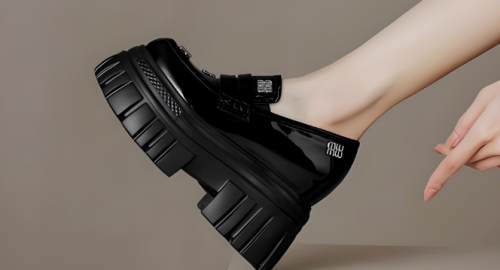
In EVA foam shoe material formulations, SEBS serves as the key modifier to enhance resilience while simultaneously optimizing puncture resistance, shrinkage resistance, and wear resistance. The need for oil filling depends on SEBS properties, material application, and processing fluidity requirements, rather than following a uniform standard. The core principle of SEBS/EVA blending is to utilize SEBS's elastic network to reinforce EVA's cellular structure, thereby suppressing compression deformation. The modification effect is positively correlated with SEBS content: under suitable processing conditions, higher addition ratios yield more pronounced improvements in resilience and collapse resistance. However, strict uniform blending must be maintained to prevent bubble rupture and performance fluctuations caused by uneven dispersion. 1. Core Basis of Oil Filling Decision The primary function of oil charging is to regulate the melt viscosity of SEBS, ensuring compatibility with the EVA processing window (conventional EVA melt index ranges from 1 to 5g/10min). Critical decisions should be based on three key factors: 1. Determination of SEBS intrinsic properties Oil-free SEBS features: melt index (MFI) of 1-5g/10min, with a white, fluffy/porous granular appearance. These products exhibit moderate molecular chain flexibility, large specific surface area, and excellent natural compatibility with EVA. Characteristics of SEBS requiring oil filling: high molecular weight, dense powder appearance, poor melt flow, and inability to blend uniformly with EVA without oil filling. 2. Priority matching of shoe material properties High-end footwear materials (midsoles for sneakers, functional shoes): The priority is "elasticity> anti-sagging> fatigue resistance> appearance". The SEBS must retain its inherent elasticity, with non-oil-impregnated solutions preferred to prevent oil migration from compromising performance stability. For mid-to-low-end footwear materials (e.g., casual shoes and budget shoes), the priority is "cost> basic resilience> manufacturability". Performance degradation from oil filling is acceptable, and a low-cost powdered SEBS combined with oil filling is recommended. 3. Processing Equipment Compatibility The equipment boasts high precision (e.g., CNC internal mixer, precision temperature-controlled extruder): By adjusting rotational speed, temperature, and mixing time, it optimizes dispersion, ensuring uniformity even when adding high proportions of non-oil-impregnated SEBS (15~20 phr). The equipment is simple (e.g., a standard open-type rubber mixer): higher fluidity requirements necessitate increased oil loading ratio for powdered SEBS to reduce processing difficulty and prevent issues like caking or material shortages. II. Key Points of Process Optimization for Oil-Filled and Oil-Free Systems 1. Oil-free process (preferred for high-end shoe materials) Mixture sequence: First, plasticize EVA at 105-115°C for 1-2 minutes. Then add SEBS and additives such as ZnO and stearic acid. The EVA melt encapsulates the SEBS particles to prevent premature agglomeration. Key parameters: The internal mixer operates at 40-60 rpm, with mixing duration of 5-8 minutes and temperature maintained at 110-120°C to prevent EVA thermal aging. High-proportion adjustment: When SEBS content exceeds 15 phr, 0.2-0.3 phr of nucleating agent (e.g., talcum powder) can be added as a dispersion anchor. A small amount of oil (oil:SEBS=0.5:1) should be incorporated to further enhance uniformity. 2. Oil-filling process (suitable for mid-to-low-end shoe materials) The pre-oiling step involves pre-mixing SEBS with naphthenic oil/paraffin oil at 120-130°C for 6-8 minutes to form an oil-impregnated masterbatch. This ensures thorough oil penetration into the molecular chains, preventing oil precipitation during subsequent blending. Blending parameters: The oil-filled masterbatch and EVA were mixed at 100-110°C with 30-50 rpm for 8-10 minutes to ensure complete interfacial blending of oil, SEBS, and EVA. Oil migration control: Select environmentally friendly oils with high flash point (≥210°C) and low aromatic content, add 0.5–1.0 phr antioxidant (e.g., 1010), and after mixing, maintain at 60–70°C for 4 hours before vulcanization to reduce free oil. III. Common Issues and Solutions 1. Inadequate oil filling leads to uneven dispersion of SEBS and bubble rupture Causes: Excessive SEBS content, insufficient mixing temperature, and inadequate EVA plasticization. Solution: Limit SEBS content to ≤20 phr, raise mixing temperature to 115-120°C, extend EVA pre-polymerization time to 2 minutes, and incorporate 0.2phr of a smoothing agent (e.g., zinc stearate). 2. The oil-filled SEBS shoe material exhibits sticky surface properties and dust absorption characteristics. Reasons: the oil filling ratio is too high, the flash point of oil is too low, and the post-vulcanization treatment is not carried out. Solution: Reduce the oil-to-binder ratio to ≤2.5:1, select paraffin oil with a flash point ≥210°C, and maintain the mixture at 80°C for 6 hours after mixing, or add 0.3–0.5 phr of silicone-based anti-blocking agent to the formulation. 3. High proportion of SEBS leads to decreased foaming ratio Reason: The melt strength is too high, which hinders the expansion of bubbles. Solution: For oil-free systems, add small amounts of naphthenic oil (0.5~1.0 phr). For oil-filled systems, reduce the crosslinking agent (DCP) dosage from 0.8phr to 0.5~0.6 phr, and increase the foaming agent (AC) dosage to 2.0~2.5 phr. IV. Performance Testing and Acceptance Criteria Elasticity: In accordance with GB/T 6670-2008, the compression recovery rate must be ≥65% for high-end shoe materials and ≥55% for mid-to-low-end shoe materials. Collapse resistance: Permanent deformation rate after 72-hour compression ≤8% (high-end) and ≤12% (mid-to-low-end) (GB/T 10654-2001). Processing fluidity: The melt flow index (at 190°C, 2.16 kg) should be maintained between 2-6 g/10min to ensure smooth foaming molding. Environmental compliance: Oil migration ≤0.5mg/cm², VOC content ≤10g/m², meeting REACH and FDA standards.