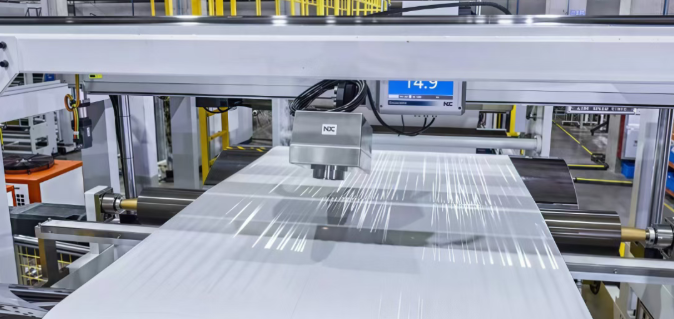
For manufacturers of hot-melt adhesives used in hygiene products, nonwovens, home textiles and labels, one challenge is particularly common: the adhesive may have the required softness and bonding performance, but still struggle to run smoothly on high-speed production lines. Many soft hot-melt adhesive formulations use star-shaped SIS to provide softness, elasticity and reliable adhesion. However, as production speeds increase, limited melt flow can lead to stringing, uneven spray patterns, poor coating consistency and other processing issues. To compensate, manufacturers may have to increase processing temperatures, adjust machine settings or reduce line speeds. These measures can help in the short term, but they do not necessarily address the underlying formulation challenge. Key Challenges in High-Speed Hot-Melt Adhesive Production Stringing and uneven spray coating At higher line speeds, insufficient melt flow can affect atomization and coating uniformity, resulting in stringing, coarse particles and uneven adhesive layers. This can increase appearance defects and production losses. Thermal damage to sensitive substrates To improve melt flow and sprayability, conventional formulations may require higher processing temperatures, sometimes around 135–145°C. Such temperatures can increase the risk of deformation or shrinkage of lightweight nonwovens, PE films and elastic materials. Adhesive degradation during prolonged high-temperature processing Extended exposure to high temperatures may lead to oxidation and viscosity changes, affecting processing stability and creating greater variation in adhesive performance between production batches. Balancing bonding performance and formulation cost Smooth PE films, laminated materials and other low-surface-energy substrates can be difficult to bond reliably. At the same time, relying heavily on higher-cost raw materials can significantly increase formulation costs. High-Flow SBS for Better Processability Instead of relying solely on higher temperatures or extensive machine adjustments, a high-flow SBS elastomer can be incorporated into the formulation to improve melt flow and coating performance. Designed with high flowability and good formulation compatibility, this type of SBS can help address common processing challenges in high-speed hot-melt adhesive production. Low-Temperature Coating With its high-flow characteristics, the SBS can help maintain good melt fluidity at lower processing temperatures. In suitable formulations, coating temperatures of approximately 115–130°C can be achieved, helping reduce the risk of heat-related damage to sensitive fabrics and films. Improved Sprayability and Coating Uniformity High-speed spray application places demanding requirements on melt flow and spray behavior. Incorporating a high-flow SBS can improve the flow and atomization of the adhesive, helping produce a more uniform and consistent spray pattern while reducing stringing and particle formation. Improved Bonding to Difficult Substrates For low-surface-energy materials such as PE films, laminated surfaces and smooth plastics, good wetting is essential for reliable bonding. A suitable high-flow SBS formulation can improve adhesive wetting and interfacial contact, contributing to more stable adhesion. Formulation Cost Optimization The high-flow SBS does not necessarily require a complete reformulation. In suitable systems, a certain proportion can be incorporated to partially replace higher-cost raw materials, helping optimize the overall formulation cost while maintaining the required adhesive performance. Application Areas 1. High-Speed Spray Application for Hygiene Products For diapers, sanitary products and elastic applications, softness and elasticity are essential, while high-speed production places additional demands on adhesive flow and sprayability. In suitable formulations, incorporating approximately 20% high-flow SBS can improve sprayability and coating uniformity while maintaining the soft and elastic characteristics required for these applications. For elastic strands and highly stretchable areas, a small amount of SEBS can also be considered to improve cohesive strength and resistance to repeated stretching. 2. Continuous Coating for Home Textiles and Labels Applications such as sofas, mattresses and curved-surface labels often require continuous, high-speed coating. Poor melt flow can lead to die blockage, unstable coating thickness and inconsistent adhesive application. Adding approximately 20% high-flow SBS to a suitable formulation can improve melt flow and processing stability, while supporting adhesion to both rough textile surfaces and smooth laminated materials. A Simple Formulation Approach A high-flow SBS can be incorporated into existing soft hot-melt adhesive systems without necessarily requiring major changes to the overall formulation. A practical approach is to: · Use soft SIS to maintain softness and elasticity; · Add high-flow SBS to improve melt flow and sprayability; · Use a small amount of SEBS, where necessary, to enhance cohesive strength and resistance to repeated deformation. This combination can help achieve a more balanced adhesive system with good flowability, smooth spray performance, stable adhesion and reliable processing. Looking for a High-Flow SBS Solution? If you are experiencing challenges with high-speed spray coating, low-temperature processing, stringing or coating consistency, our team can help evaluate suitable SBS solutions for your formulation and application. Contact us to learn more about the available grades and discuss your specific requirements.