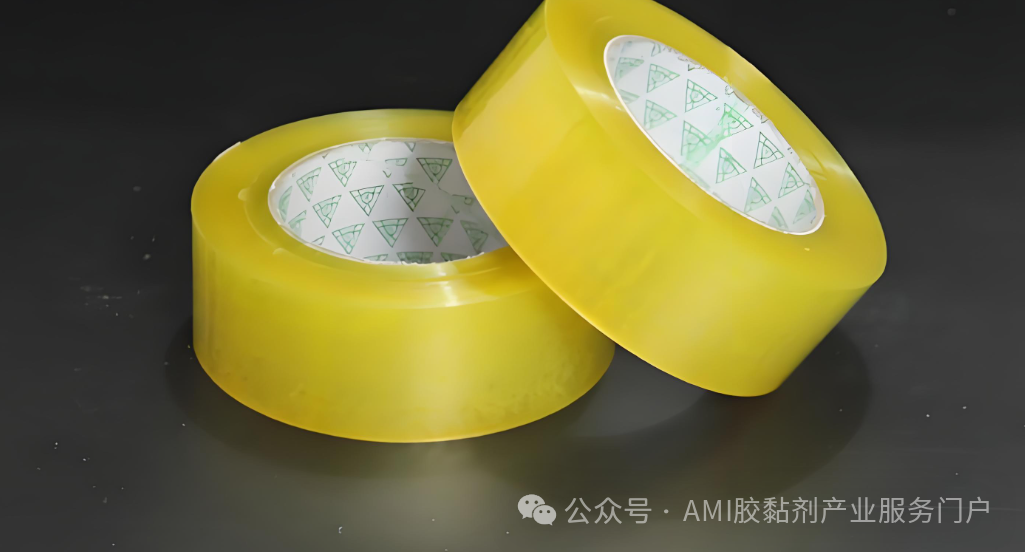
I. SBS is Predominantly Selected as the Base Material for Hot-Melt Pressure-Sensitive Adhesives in Tapes In general-purpose tape formulations for hot-melt pressure-sensitive adhesives (HMPSAs), SBS (Styrene-Butadiene-Styrene) serves as the mainstream elastomer base material, fundamentally balancing cost-efficiency with comprehensive performance. From a cost perspective, the raw material price of SBS is lower than that of similar thermoplastic elastomers such as SIS or SEBS, and its market supply is abundant and stable. This enables a substantial reduction in raw material costs for large-scale tape production, making it highly compatible with the pricing requirements of mass-market products like ordinary packaging tapes and consumer-grade self-adhesive labels. From a performance standpoint, SBS relies on its styrene hard blocks to form a physically crosslinked structure, which delivers excellent cohesive strength, holding power, and high-temperature anti-creep performance. This effectively prevents common tape performance failures during application, such as edge warping, de-bonding, adhesive bleeding, and residue transfer. Furthermore, SBS exhibits excellent compatibility with additives like C5/C9 petroleum resins, naphthenic oils, and antioxidants. It demonstrates stable melt processing properties well-suited for high-speed hot-melt coating production processes, offers straightforward formulation adjustments, and delivers exceptionally high overall cost-effectiveness. II. Root Causes of Insufficient Tack in SBS Hot-Melt Pressure-Sensitive Adhesives Constrained by its inherent molecular structure, pure SBS systems naturally possess a bottleneck regarding tack performance. First, the proportion of hard blocks in SBS is relatively high, resulting in a large modulus and hardness at room temperature. This poor gel flexibility makes it difficult for the adhesive to deform and spread rapidly under pressure. As a result, it fails to fully wet the substrate surface, resulting in a small effective contact area and weak instantaneous bonding capability. Second, SBS primarily consists of a complete tri-block structure with an extremely low di-block content. This leads to insufficient molecular chain flexibility and poor surface wetting characteristics, making it difficult to establish rapid interfacial adhesion. Third, SBS exhibits a relatively high melt viscosity and mediocre fluidity under hot-melt conditions, which restricts its coating and spreading performance. Compounded by the system's excessively high cohesive strength and strong elasticity, initial conformability is further compromised, resulting in issues such as weak initial bonding and a poor subjective tack sensation. III. Blending with Yue化 SIS as a Solution to Improve Tack To address the initial tack deficiencies found in pure SBS formulations, the optimal modification strategy is to retain the SBS-based matrix while blending in two specific grades from Yue化: SIS-1105 and SIS-1106. By leveraging the structural advantages of SIS to achieve performance complementarity with SBS, the tack deficiency can be resolved cost-effectively. 1. Mechanism of Tack Enhancement · Structural Empowerment: Both SIS-1105 and SIS-1106 feature a linear structure with low styrene content. They possess a high proportion of isoprene soft blocks, which leads to a lower room-temperature modulus and ease of deformation under stress. This allows the adhesive to spread quickly across the substrate surface, maximizing the effective contact area between the adhesive layer and the substrate, thereby rapidly enhancing the initial tack effect. · Contribution of Di-blocks: SIS-1106 contains approximately 17% di-block (SI) components, which form a purely viscoelastic structure lacking hard-block domains. This component is a critical key to boosting tack, significantly increasing the surface affinity of the adhesive layer and reinforcing instantaneous bonding performance. · Wettability and Compatibility: Both SIS grades exhibit lower melt viscosities and excellent compatibility with various tackifying resins as well as common tape substrates like paper and PE. During the coating process, the adhesive compound flows more smoothly, yielding a uniform and full adhesive surface that quickly establishes a stable and effective interfacial bond. · System Synergy: Blending SBS with SIS enables complementary performance optimization: SBS guarantees holding power and cohesion, while SIS delivers rapid initial tack. Specifically, 1105 focuses on maintaining cohesive stability in the system, whereas 1106 targets fluidity and tack enhancement. When the two are blended at a ratio between 5:5 and 7:3, an optimal balance between initial tack and long-term holding power can be perfectly achieved. 2. Grade Selection and Dosage Reference Grade selection can be flexibly adjusted depending on specific production requirements: · For applications pursuing extreme tack and high-speed coating production conditions, select SIS-1106 alone, which is perfectly suited for fast-bonding tape products. · When it is necessary to balance tack, cohesion, and anti-creep performance, a combined addition of 1105 and 1106 should be adopted. In practical formulations, it is recommended that the total SIS loading accounts for 20% to 40% of the total elastomer content. When synergistically modified with 20% to 30% rosin ester tackifying resins, the tackifying efficiency can be maximized, comprehensively resolving the problem of insufficient tack in SBS-based hot-melt adhesives. Grade / Formulation Key Functional Characteristics Recommended Applications / Proportions SIS-1106 (Standalone) High di-block content (~17%), low viscosity, maximizes immediate wetting & wetting area. Fast-bonding tapes; high-speed coating lines. SIS-1105 + SIS-1106 (Blend) Balances system cohesion, anti-creep, and fluid tack via synergetic crosslinking optimization. 20%-40% of total elastomer (5:5 to 7:3 blend ratio).