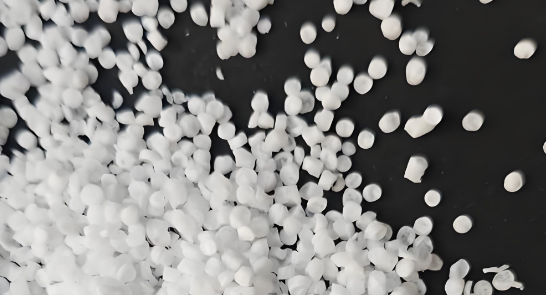
Conventional EVA foam has high rebound and poor damping. On foot strike, impact energy is not effectively absorbed by the material — most of it is transmitted directly back to the foot, knee, and spine, causing fatigue and discomfort during prolonged wear. Standard sports cushioning materials offer limited energy absorption and cannot deliver true flexible impact protection. To achieve a soft underfoot feel in EVA foam, formulators typically turn to high-VA base resins (18–22% VA), which offer superior cushioning and softness after foaming compared to low-VA grades (around 12% VA). However, high-VA resins come with trade-offs: reduced abrasion resistance, higher compression set, greater odor risk, and higher cost. When VA content cannot be increased further, achieving softness + low-rebound damping + anti-collapse stability simultaneously requires a functional modifier. Conventional rubber and standard elastomers have weak damping performance and can only provide rigid structural support. They are ineffective at absorbing fine road vibrations and high-frequency engine tremors, leading to resonance and noise inside the cabin. Prolonged vibration also accelerates aging and loosening of interior plastics and electronic components. Traditional soundproofing materials are largely limited to blocking airborne noise and are ineffective against structure-borne vibration transmitted through floors and walls — such as footstep impacts, low-frequency equipment vibration, and impact noise. The common shortcoming is: 'blocks sound, but cannot absorb vibration.' For all the above pain points, low-rebound, high-damping linear SEBS offers a molecularly engineered solution — one that addresses the fundamental performance limitations of conventional materials. The defining advantage of this SEBS grade is a glass transition temperature (Tg) close to room temperature, combined with a low hardness of approximately Shore A 50. This sets it apart from conventional elastomers. Most standard elastomers have Tg values far from ambient temperature — at room temperature they are either too rigid (no cushioning) or too elastic (too much rebound), capable only of storing energy, not dissipating it. This grade operates in a high-damping molecular relaxation zone at room temperature. When subjected to mechanical impact, vibration, or acoustic waves, rather than bouncing back elastically, the molecular segments undergo chain sliding, extension, and relaxation — converting kinetic energy, vibrational energy, and acoustic energy into heat. Energy is dissipated rather than returned. The result is outstanding shock absorption, cushioning, and sound damping performance. The linear molecular architecture, combined with moderate polarity, also gives this grade excellent compatibility with EVA, a wide range of fillers, and polymer substrates, making it highly versatile for compounding and modification. Blending this SEBS with EVA and foaming agents significantly lowers the rebound value of the EVA system and dramatically improves damping performance. Impact stress on foot strike is effectively dissipated, resolving the 'hard, springy, fatiguing' feel of conventional EVA foam. The modified midsole delivers a soft underfoot feel combined with structural support — cushioning joints without excessive collapse — suitable for athletic shoes, running shoes, and casual footwear across all categories. This grade serves as the core raw material for flexible TPE damping pads, sports protective gear cushioning layers, and functional elastic accessories. Its superior energy absorption provides continuous, stable protection in knee pads, wrist guards, sports seat cushions, and fitness cushioning components — reducing impact load and significantly improving wearing comfort and safety. Leveraging its aging resistance, high damping, fatigue resistance, and ultra-low VOC profile, this grade is suitable for TPE automotive damping gaskets, anti-vibration / anti-slip components, and interior noise-reduction cushioning parts. It effectively absorbs high-frequency road vibrations, attenuates mechanical noise, reduces body resonance, and enhances ride comfort — well-suited to the long-term, complex operating conditions of automotive applications. This grade can be processed into high-performance integrated TPE sound absorption and vibration damping pads, overcoming the single-function limitation of traditional materials. It simultaneously absorbs airborne sound waves through molecular damping and blocks structure-borne vibration transmitted through floors and walls — delivering both vibration damping and sound absorption in one material. Applications include residential soundproofing, commercial interior fit-out, equipment room noise control, and floor anti-vibration systems. This grade is supplied as a loose-pellet form. Core parameters: ● Melt Flow Rate (200°C, 5 kg): 2.1 — excellent processability for extrusion, injection molding, and internal mixer compounding ● Hardness: Shore A 50 ± 5 — balanced softness and support, suitable for flexible cushioning products ● Tensile Strength: ≥ 10 MPa — durable under repeated deformation ● Elongation at Break: ≥ 700% — outstanding flexibility and fatigue resistance ● 300% Modulus: ≥ 1.0 MPa — stable structural support without collapse ● Volatile Matter: ≤ 1.0% — high purity, low odor, compliant with consumer and industrial environmental standards Blend directly with EVA pellets, foaming agents, and functional additives. Process via internal mixing, open mill mixing, and compression foam molding in a single integrated step. The addition ratio can be fine-tuned to meet target cushioning and rebound specifications, providing precise control over midsole softness and shock absorption performance. Use this grade as the primary base material, optionally compounded with small amounts of plasticizer and functional fillers. Process by high-temperature melt blending, extrusion sheeting, and cooling to shape. The process is straightforward, dimensionally stable, and produces a uniform end product — no complex formulation development required, with significant cost and efficiency advantages. In summary, this high-damping, low-rebound SEBS is a purpose-engineered functional modifier for shock absorption and acoustic applications. It addresses the core performance limitations of conventional materials at the molecular level, and is broadly compatible with the four major application sectors: footwear, sports, automotive, and construction — making it the ideal upgrade material for flexible cushioning and noise-reduction products.Part I. Industry Pain Points
1.1 EVA Footwear & Sports Protection
1.2 Automotive Damping
1.3 Architectural Acoustics
Part II. The Molecular Mechanism Behind Damping Performance
Part III. Multi-Sector Applications
3.1 EVA Midsole Modification
3.2 Sports Equipment & Apparel
3.3 Automotive Damping Components
3.4 Architectural Sound Absorption & Vibration Damping
Part IV. Key Performance Parameters
Part V. Processing Guidelines
5.1 EVA Footwear Modification
5.2 TPE Damping & Acoustic Pad Production