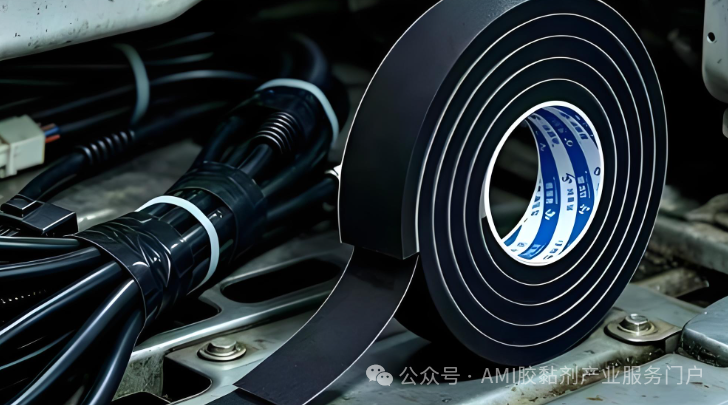
High-Temperature SIS for Hot Melt Pressure Sensitive Adhesives High-Temperature and Creep-Resistant Hot Melt Pressure Sensitive Adhesives: How to Select the Right SIS In industrial tape, high-temperature labeling, automotive wire harness fixing, masking tape and heavy-duty packaging tape applications, the high-temperature creep resistance of hot melt pressure sensitive adhesives (HMPSA) is a key factor that determines long-term bonding performance. Many conventional SIS-based hot melt adhesives experience a rapid decrease in cohesive strength when exposed to temperatures above 100°C. The adhesive layer may soften, creep, cause edge lifting, adhesive overflow or even bond failure under continuous stress. To achieve stable performance at temperatures up to 120°C with excellent creep resistance, the selection of the SIS polymer base plays a critical role. Instead of relying only on resin or additive adjustments, a properly designed SIS molecular structure with stable high-temperature modulus retention is essential. 1. Challenges of Conventional SIS in High-Temperature Applications Rapid Performance Loss at Elevated Temperatures Conventional general-purpose SIS grades are typically designed to provide high initial tack, good flowability and easy coating performance. However, their styrene domain stability and molecular structure may not be sufficient for demanding high-temperature applications. When the temperature exceeds 100°C, the physical crosslinking network provided by styrene domains begins to weaken at elevated temperatures. As a result, the storage modulus decreases significantly, and the adhesive layer may transition from elastic behavior to excessive flow, leading to continuous creep deformation under load. Application Failures Under Heat Exposure In high-temperature environments, conventional adhesives may encounter issues such as: · Label lifting and detachment · Loosening of automotive wire harness tapes · Adhesive migration and residue · Masking tape failure during baking processes · Packaging tape displacement under heavy loads These limitations make them unsuitable for industrial applications requiring long-term reliability and heat resistance. 2. Molecular Advantages of High-Temperature SIS Balanced Molecular Architecture SIS grades designed for high-temperature pressure sensitive adhesive applications utilize a balanced molecular structure, including optimized styrene content and diblock ratio. This design provides a balance between: · Sufficient adhesive wetting and bonding capability · Stronger physical crosslinking stability · Improved resistance to thermal softening and creep deformation Through molecular architecture optimization, the adhesive maintains better cohesion and dimensional stability under elevated temperatures. Stable Modulus Retention at High Temperatures For high-temperature applications, maintaining storage modulus at elevated temperatures is critical. Compared with conventional SIS grades, specially designed high-temperature SIS can maintain more stable modulus performance across a wide temperature range. The adhesive layer remains stronger and less prone to softening or deformation, allowing it to withstand continuous shear stress and mechanical loads. This makes it suitable for applications requiring reliable performance around 120°C. 3. Key Applications of High-Temperature SIS With excellent heat resistance, creep resistance, low adhesive migration and aging stability, high-temperature SIS is suitable for various industrial adhesive applications, including: Automotive Wire Harness Tapes Used for cable fixing and protection in automotive environments where long-term heat resistance and reliable adhesion are required. High-Temperature Labels and Identification Tapes Suitable for industrial labels, nameplates and tracking labels exposed to elevated temperatures. Baking Process Masking Tapes Provides improved holding power and clean removal performance during high-temperature coating and baking processes. Heavy-Duty Packaging and Outdoor Adhesive Tapes Helps improve load-bearing capability and environmental durability in demanding packaging applications. 4. Formulation Optimization for High-Temperature Hot Melt Adhesives Improving Melt Processability High-temperature SIS grades generally feature stronger molecular interactions and higher cohesive strength, which may result in relatively higher melt viscosity. To improve coating processability, formulators can combine high-flow SIS grades with optimized polymer blends and carefully selected processing oils while maintaining the overall heat resistance of the adhesive system. Upgrading Tackifying Resin Systems Replacing conventional C5 or C9 hydrocarbon resins with hydrogenated tackifying resins can further improve: · Thermal stability · Aging resistance · Low odor properties · Resistance to resin migration A properly optimized resin system enables the final adhesive to achieve a balance of heat resistance, low creep and long-term durability. 5. Conclusion The high-temperature performance and creep resistance of hot melt pressure sensitive adhesives depend largely on the high-temperature modulus retention and molecular design of the SIS polymer, rather than simply increasing additives. For industrial adhesive applications requiring stable performance around 120°C, selecting SIS grades with optimized styrene/diblock balance and excellent thermal stability is essential. Combined with suitable tackifier selection and formulation optimization, advanced SIS solutions can help adhesive manufacturers develop high-performance products for industrial tapes, high-temperature labels, automotive applications and other demanding environments. DZBH provides SIS solutions for high-performance adhesive applications, including customized SIS grade development, supported by technical assistance in grade selection, formulation optimization and application evaluation.