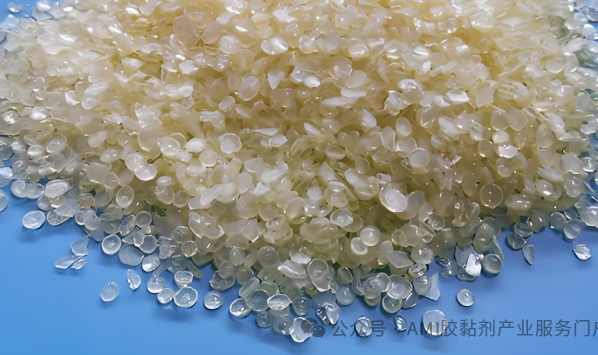
SIS itself is a low-polarity elastomer, and the polarity of commonly used tackifying resins is rosin acid resin, terpene-phenolic resin, rosin ester resin, C5/C9 copolymer petroleum resin, C9 aromatic petroleum resin, hydrogenated C9 petroleum resin, C5 aliphatic petroleum resin, hydrogenated C5 petroleum resin and pure terpene resin. There are significant differences in the compatibility between tackifying resins of different polarities and SIS formulation components, and the corresponding selection principle should be followed according to the polarity of the bonded substrate to achieve the best bonding effect. II. Medium polarity tackification resin Glycerol rosin ester, pentaerythritol rosin ester, C5/C9 copolymer petroleum resin IV. Very low polarity tackification resin 1. Representative Varieties: Prefer resins with strong compatibility with SIS, modifiers (POE, EVA), and additives (waxes, antioxidants). Avoid the deterioration of the adhesive layer due to compatibility problems, and finally achieve a balance between the bonding effect and the stability of the system.
I. High polarity tackification resin
1. Representative Varieties:
Terpenes - phenolic resins
2. Compatibility Performance:
It is one of the core resins in SIS adhesives that have both viscosity and reinforcement functions.
Good compatibility with the isoprene elastic segment of the SIS,
It can form a uniform microscopic phase separation from the styrene hard section, which will not affect the stability of the adhesive layer.
Excellent compatibility with medium polar components in formulations (e.g., rosin ester, C5/C9 copolymer petroleum resin); When compounding with low-polar components (such as C5 petroleum resin, POE), a small amount of compatibilizers need to be added; Compounding with highly polar components requires no additional adjustments.
3. Substrate selection principles:
It is suitable for bonding medium to high polar substrates, and can improve the initial adhesion and adhesion of wood, glass, and polar plastics such as PVC. It can be used in small quantities for transitional bonding scenarios between polar and non-polar substrates to balance the bonding effect.
1. Representative varieties:
2. Compatibility Performance:
Rosin ester resin: modified by rosin esterification, the polarity is significantly reduced compared with the original rosin, the compatibility with SIS is good, and it can form a partially miscible continuous phase with SIS; Highly compatible with most components in the formulation, whether it is low-polarity POE, C5 petroleum resin, medium polarity C9 petroleum resin, medium VA content EVA, stable compounding can be achieved without the need for additional compatibilizers.
C5/C9 copolymer petroleum resin: has both aliphatic and aromatic structures, has a medium polarity, and is optimally compatible with SIS, and is the core tackifier component of general-purpose SIS formulations; It can be well integrated with plasticizers, antioxidants, waxes and other components in the formula, and has the widest range of adaptation.
3. Substrate selection principles:
It is a universal choice that can bond polar substrates such as paper and wood, as well as non-polar substrates such as PE and PP.
It is especially suitable for general-purpose formulations that require bonding to both polar and non-polar substrates, balancing wettability and bond strength.
III. Low-polarity tackification resin
1. Representative Varieties:
C9 aromatic petroleum resin, hydrogenated C9 petroleum resin
2. Compatibility Performance:
It has good compatibility with SIS, especially the isoprene elastic segment of SIS, which can improve the flexibility and impact resistance of the adhesive layer.
Excellent compatibility with low-polarity components in the formulation (e.g., POE, C5 petroleum resin, hydrogenated C5 petroleum resin, polyethylene wax) and can be compounded in any ratio; There were no obvious adverse reactions when compounded with medium polar components. It is not compatible with highly polar components (such as rosin acid-based resins and EVA with high VA content), and the dosage of highly polar components needs to be controlled during compounding.
3. Substrate selection principles:
It is more suitable for bonding non-polar or weakly polar substrates, such as PE film, PP pipe, EVA foam, etc., which can enhance the wettability of the adhesive layer on the surface of the substrate and improve the bonding stability.
Hydrogenated C9 petroleum resin can also be used in outdoor non-polar substrate bonding scenarios due to its better weather resistance.
C5 aliphatic petroleum resins, hydrogenated C5 petroleum resins, pure terpene resins (α-terpene resins, β-terpene resins)
2. Compatibility Performance:
The molecule is dominated by aliphatic or cyclic aliphatic structure, contains almost no strongly polar functional groups, and has optimal compatibility with the SIS, and can be fully integrated into the continuous phase of the SIS elastomer without phase separation problems.
Perfectly compatible with all low-polarity components in the formulation; It can also maintain system stability when compounded with medium polar components. When compounding only with highly polar components, the ratio should be strictly controlled, and a small amount of C5/C9 copolymer petroleum resin should be added as a compatible agent if necessary.
3. Substrate selection principles:
It is the best choice for bonding non-polar substrates, which can maximize the bonding strength and adhesion of non-polar substrates such as PE, PP, and polyolefin composites. It has excellent weather resistance and low temperature crack resistance, and is suitable for bonding scenarios of non-polar substrates in harsh environments such as low temperature and outdoors.
V. Core principles of overall selection
1. Polarity Matching Principle:
When bonding polar substrates, high to medium polarity tackifying resins are preferred, or the interaction between the adhesive layer and the polar groups of the substrate is strengthened by compounding high polarity and medium polarity resins.
When bonding non-polar substrates, low to very low polarity tackification resins are preferred to ensure good wettability between the adhesive layer and the substrate surface. The universal formulation is based on a medium-polar C5/C9 copolymer petroleum resin and is compounded with a small amount of tackifying resin corresponding to the polarity according to the polarity bias of the substrate.
2. Compatibility principle: