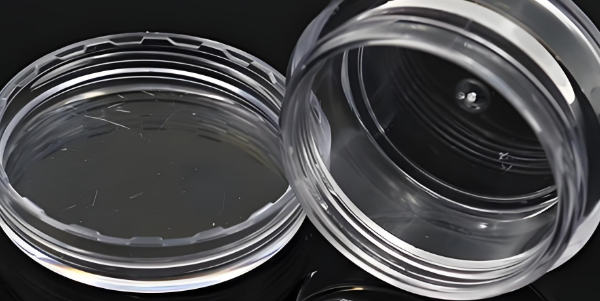
Keywords: PS; Toughening; SBS High-gloss PS features a smooth surface and excellent moldability, making it widely used in fields where both aesthetics and toughness are required, such as packaging containers, stationery, home appliance casings, electronic and digital accessories, and automotive interior parts. To achieve efficient toughening of high-gloss PS, one of the core keys lies in the selection of SBS and the matching of formulation processes. The specific tips are as follows: For the toughening agent, 5%–8% oil-free linear SBS with high styrene content is preferred. This type of SBS has good compatibility with the PS matrix, forming small and uniformly dispersed phase particles. It will not damage surface flatness due to oil phase migration, thus maximizing the retention of PS's high-gloss properties. If it is necessary to improve processing fluidity, a small amount of PE wax or PS wax can be added. If further reduction of melt viscosity is required, it is recommended to incorporate 30% GPPS/HIPS with high melt flow rate (MFR) into the base material, rather than relying on SBS oil extension. If oil-extended SBS has to be selected due to special requirements, the oil dosage must be strictly controlled ≤10phr (naphthenic oil). In addition, a compatibilizer should be added to inhibit oil phase migration and avoid significant reduction of glossiness. Adopt a twin-screw extruder with high length-diameter ratio (L/D≥30:1), and follow the stepwise feeding process of "melting PS first, then adding SBS". This method can prevent SBS from premature heating and agglomeration in the feeding section, ensuring its uniform dispersion in the PS matrix, which not only guarantees the toughening effect but also maintains the smooth surface finish of the products. Choose linear SBS with high styrene content as the toughening agent.I. Key Tips for Toughening High-Gloss PS
Core Principles of Formulation Optimization
Key Points of Pelletizing Process
II. Selection of Toughening Agent SBS