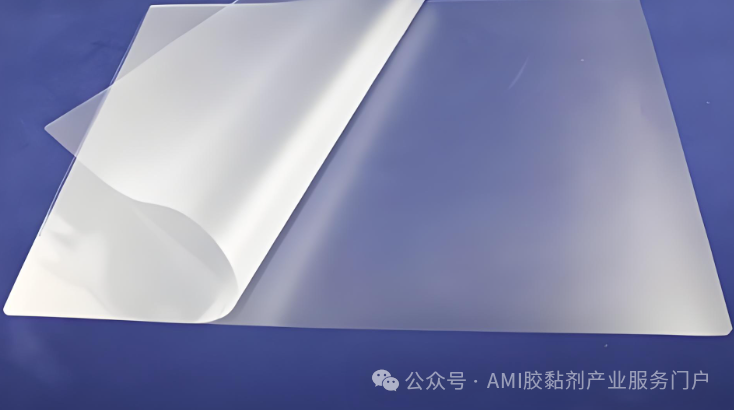
Keywords: SEBS; film; market trends In 2026, the global SEBS-based film market maintained a trend of steady growth, stable profitability, and structural upgrading. Its overall growth rate and profitability outperformed general polymer materials, making it a segment with strong growth certainty in the elastomer film sector. I. Market Size and Profitability Performance In 2026, the global SEBS-based film market grew by 7%–8% year on year. The growth rate slowed slightly compared with previous years, but remained resilient. The Chinese market contributed over 45% of global demand growth, serving as the core growth engine. The overall industry gross margin stayed within the range of 20%–28%, with stable profitability — higher than EVA film and close to POE film. Among them, high-end functional products such as medical grade, lithium battery specialty, and low-VOC grades enjoyed significant premiums, with gross margins reaching 28%–35%. General-purpose products, affected by raw material and cost pressures, had gross margins concentrated at 20%–23%. The industry featured stable volume and price, and enhanced profitability from high-end products. No overcapacity or price wars occurred, and the supply-demand structure remained healthy. II. Core Technology Development Trends Technological iteration focuses on four directions: green development, high-end upgrading, specialization, and domestic substitution, which have become the core competitiveness of enterprises. Low VOC and environmental protection To meet strict emission standards for automotive interiors and consumer electronics, halogen-free, low-odor, and non-migrating properties have become standard requirements. Breakthroughs in medical-grade products Development focuses on biocompatibility, sterilization resistance, and high transparency, with products certified to ISO 10993 for use in packaging, catheters, and protective consumables. Specialization for lithium battery applications Emphasis on improving high insulation, temperature resistance, electrolyte resistance, and barrier properties to meet the packaging needs of power batteries and energy storage systems. Specialization for hot melt adhesives and disassembly capability Optimization of adhesion strength, aging resistance, and recyclability to align with carbon neutrality and circular economy goals. Accelerated domestic substitution Local enterprises are narrowing the gap with international leaders in hydrogenation technology, molecular weight control, and functional modification, steadily increasing the self-sufficiency rate of high-end grades. III. Core Application Market Trends Benefiting from its non-toxicity, high elasticity, weather resistance, and easy processability, SEBS film has seen concentrated demand growth across four major sectors. The automotive sector is the largest application, focusing on interior covering, sealing, shock absorption, and wire harness sheathing. Demand driven by low VOC and lightweighting is growing at over 10% annually. The medical sector is the fastest-growing, with domestic medical-grade SEBS ramping up production for sterile packaging and flexible devices, expanding at more than 15% per year. The lithium battery sector is growing rapidly, used in separator coatings, cell buffering, and insulating packaging. Safety requirements are driving higher penetration. The construction materials sector mainly includes waterproof membranes, sealing films, and asphalt modification, with stable growth and steady cash flow. Overall, applications are upgrading from general-purpose consumables to high-end manufacturing, new energy, and healthcare, with a continuously optimized product structure. IV. Overall Industry Outlook for 2026 In 2026, the SEBS film industry maintained a sound momentum characterized by stable growth, high profitability, strong substitution, and optimized structure, with growth and profitability outperforming traditional film categories. Technologies are upgrading toward low VOC, medical applications, lithium batteries, and recyclability, while domestic substitution continues to deepen. Applications are supported by automotive, medical, lithium battery, and construction materials sectors, with high-end development driving value improvement. The industry shows no obvious cyclical fluctuations, making it a high-quality segment in elastomer materials that combines both growth potential and profitability.