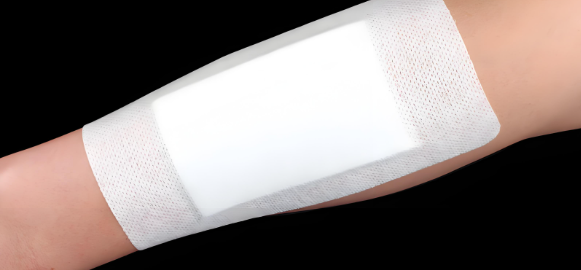
Keywords: Medical Dressings; SIS Pressure-Sensitive Adhesive In 2025, the size of China's medical dressing market is expected to reach 29.1 billion yuan. In 2026, the market for functional skincare and medical device dressings in China will reach 25.38 billion yuan. By 2030, the retail market size of collagen medical dressings will reach 70.13 billion yuan. This is a huge market with enormous business opportunities. I. Comparison of Pressure-Sensitive Adhesive Base Materials for Medical Dressings Medical dressings are typically prepared by mixing drug powders or liquids with adhesives under certain conditions to form a viscous ointment. The adhesive used here is a hot-melt pressure-sensitive adhesive, and common base materials include: Natural rubber: Relatively low in cost, but may cause skin allergies in some people and has poor aging resistance. Acrylate polymers: Excellent water resistance, chemical resistance and aging resistance, less likely to cause allergic reactions, suitable for all skin types. However, their elasticity is relatively poor, limiting their application in some dressings requiring high elasticity. Silicone: Excellent biocompatibility, low surface energy and good chemical stability, gentle to skin, low allergy risk and good air permeability. However, it is relatively expensive and has relatively weak adhesion. Polyurethane: Good elasticity, softness and wear resistance, can adapt to skin stretching and movement, with certain air permeability and moisture permeability. It can be formulated into hydrophilic or hydrophobic pressure-sensitive adhesives. Cost is relatively high. SIS: Fairly good biocompatibility, low cost and moderate adhesion. Its water resistance and chemical resistance are relatively poor. II. Key Formulation Points of SIS Pressure-Sensitive Adhesives for Medical Dressings A) Selection of SIS SIS YH-1126 (low molecular weight, high initial tack) SIS YH-1125 (balanced initial tack and peel strength, high cohesive strength) SBS YH-188E (improves holding power; performance can be optimized by blending with SIS) Biocompatibility: Must comply with ISO 10993 or USP Class VI standards. B) Breathability Optimization SIS: Low-molecular-weight SIS can increase the microporosity of the adhesive layer. Addition of nano-SiO₂: Forms air-permeable channels to prevent skin stuffiness. C) Drug Loading Capacity Control Drug compatibility test: Ensure no reaction between the active pharmaceutical ingredient (API) and SIS. Accelerated release: Increase the oil extension ratio. Sustained release: Add fillers such as nano-SiO₂ and microcrystalline cellulose.